
Ferguson Arrests and County Booking
Ferguson sits in Pulaski County, Kentucky. The 2020 Census counted 886 people. Chief David Cornett runs the Ferguson Police Department, the municipal police route. The city keeps no jail and no public booking database. PCDC lists Ferguson Police among the agencies it serves.
That split shapes every search. Ferguson Police hold the report, the narrative, and any city-taken image. The Pulaski County Detention Center keeps the intake record and the official current-inmate list. The court clerk holds whatever the case becomes later. Someone can be arrested by city police, booked at PCDC, released, and still turn up in old news clippings years after. Each source answers a different question. Know which one you need before you start.
Where Ferguson Busted Mugshots Appear
There is no complete Ferguson blotter, daily arrest list, or city mugshot feed to pull from. Official custody information starts with PCDC JailTracker. The portal offers no promise of a photo on its result pages. For anything the city holds, Ferguson's police contact and public records folder are the route to try.
| Source | Photo | Status | What it answers |
|---|---|---|---|
| PCDC JailTracker | Not guaranteed | Official | Current PCDC custody |
| Ferguson Police | Request if held | Official | City arrest or incident record |
| Pulaski court clerk | No photo feed | Official | Case and disposition |
| Commonwealth Journal | Some story images | Independent news | Selected event context |
| County archive pages | Often | Unofficial | Historical lead only |
PCDC publishes no verified 24-hour, 48-hour, 72-hour, or weekly booking feed. An internal daily log referenced in an old policy is not public material. No sheriff booking-photo app exists in any verified form either.
Finding Who Was Busted in Ferguson
Search by dates and agency, not name alone. An arrest can happen well before jail intake. A roster entry can vanish once someone is released or transferred. The jail's historic policy says intake requires documented legal authority. It also says JailTracker tracks both intake and release. The public roster follows no published posting schedule, though. Timing is always an estimate.
- Open the official PCDC current-roster page and complete its public CAPTCHA.
- Search first and last name, then record the date of the check.
- Confirm the arresting agency. A PCDC result alone should not be labeled a Ferguson Police arrest.
- Use Ferguson's official records folder for the city report or a city-held photograph.
- Check the Pulaski clerk for the court case and its disposition.
A missing name can mean release, transfer, a posting delay, another booking site, or no county detention at all. It never rules out an arrest. The Pulaski County busted mugshots hub lays out the county roster, booking records, and date-scoped request routes in full detail.
Note: Save the source and check date because PCDC custody can change while police, court, and archive records remain.
Ferguson Police Records Folder
Ferguson's official site sends public-record requests to a public Google Drive folder. Open it before quoting anything. Read the documents inside first. Fees, delivery rules, a custodian's name, and response times all come from those files. A folder label alone proves nothing. For a police request, the address below stays the controlling contact block.
- Open the folder from the official city site and read the current form before sending anything.
- Describe the specific Ferguson Police record, person, approximate date, and event.
- Follow only the delivery and fee instructions printed in the current official form.
- Contact Ferguson Police when a form term is unclear. Do not substitute a general city-office address.
- Request PCDC's intake record separately if the sought item was created at the jail.
Chief David Cornett
414 Murphy Avenue
Ferguson, KY 42533
Office: 606-679-6800
Cell: 606-305-0581
Fax: 606-425-5328
A Drive folder is an odd route. It is the official one, though. Treat it as a starting point, not a finished answer. Kentucky's response framework still governs any valid request. Exemptions can also shield active investigations, juvenile material, or sealed records from release.
Ferguson Busted Records Access
Checking the Ferguson records folder at the source separates the real municipal route from the noise of unrelated search results. A downloaded copy may lag behind what the folder currently holds.
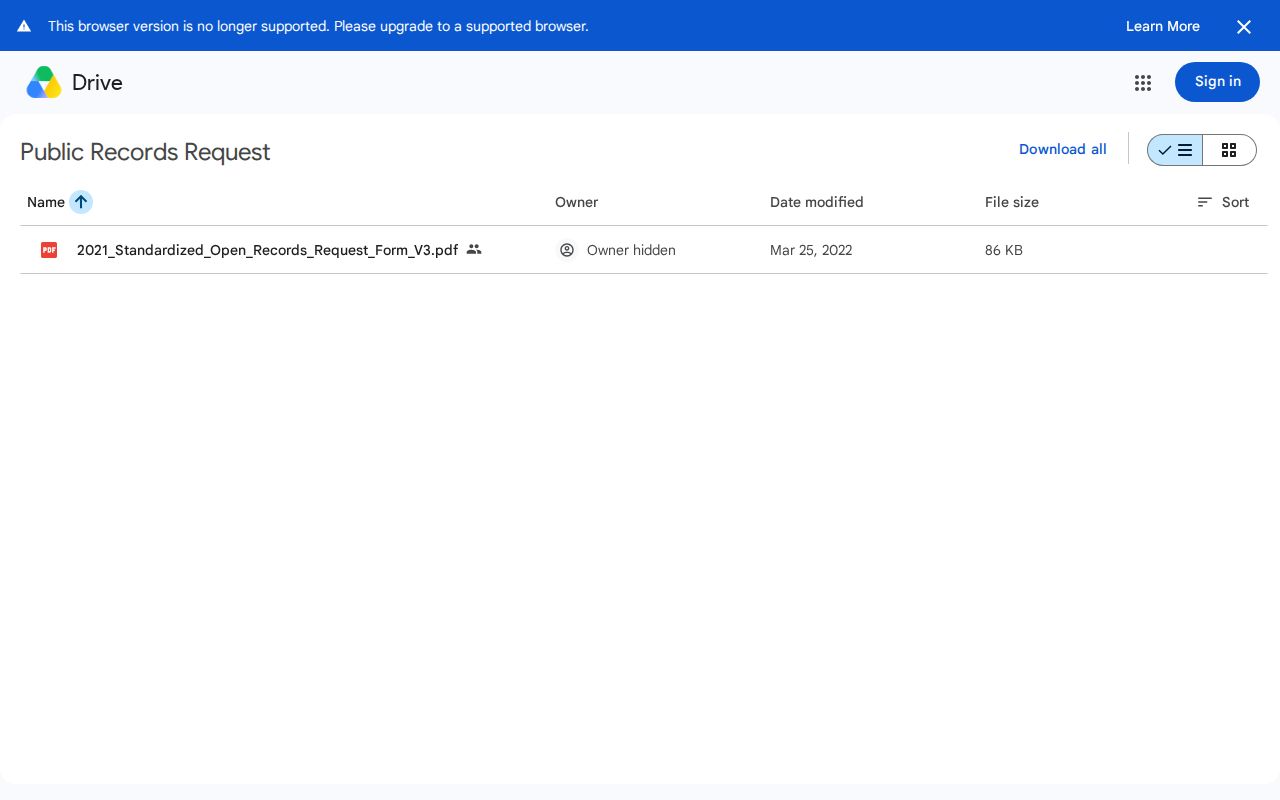
The folder confirms the public path for records requests, but any fee or delivery terms live only in the documents inside it.
When Ferguson Mugshots Reach PCDC
Nothing here happens on a guaranteed same-day schedule. The arrest is the police event. Booking is the jail's intake step. The roster is the public display of current custody. Release takes the person out of custody, though other records can linger. Each stage carries its own timestamp.
That is why a dated Ferguson police record stays valid even after JailTracker drops the name. A PCDC entry, meanwhile, may belong to another agency, a hold, or a transfer rather than the city department. Read the arresting-agency and status fields whenever the result shows them. Just because a platform supports a field does not mean Pulaski displays it every time.
Ferguson Arrest News and Archives
The Commonwealth Journal search sometimes carries Ferguson events. Its county coverage is selective. Open the full story and confirm the location and agency. Note the publication date. Keep every claim attributed. An empty search only means no story was found.
Commercial archives fill a different niche. Busted Newspaper has shown a Ferguson tag, but its tags fall far short of a complete city map. Mugshots.com offers a Ferguson filter inside a historical county archive. RecentlyBooked, Mugshots.zone, Arrests.org, and Arre.st all lean on county, agency, or archive views rather than any official Ferguson feed. Dates can go stale. Images can outlive a release. Treat these sites as supplements to PCDC, Ferguson Police, and the court, never substitutes. For a deeper look at county news versus archives, see Pulaski County Arrest News. When sources disagree, trust the current government record and note when you checked each one.
After a Ferguson Busted Booking
Once booking wraps up, the courthouse becomes the place to watch. The Pulaski court system tracks everything that happens next. An arraignment sets the first appearance. Bond decides release terms. Eventually the court records a final result. A mugshot or news blurb tells you none of this. For real answers, go to the source.
Start with the Pulaski Court of Justice, since the clerk handles record requests there. Older files may ask for a case number rather than just a name. If the person ends up in state custody, KOOL lists Kentucky DOC inmates and supervisees, though it is not a county booking feed. VINE sends custody-change alerts and is separate from photos too.
- Current custody
- A dated PCDC roster result.
- City record
- A Ferguson Police file about its event.
- Court result
- The later disposition in the case.
- Archive entry
- An unofficial copy that may be old or incomplete.
Protected Ferguson Arrest Records
Kentucky law keeps juvenile records under tight wraps. KRS 610.320 bars most public access to juvenile court and law-enforcement files. Only narrow exceptions apply. Sealed cases, expunged matters, investigative files, and victim information can also stay off limits. An old archive may show something online. That does not make republishing it wise or accurate.
Keep your lookups to the basics: agency, date, custody status, and court outcome. Leave out full birth dates and home addresses. Skip medical details, victim facts, and anything tied to a juvenile. That keeps the record in context and spares people needless harm.
Note: A booking image is not a conviction record, and protected details should remain omitted even if an unofficial source displays them.